Made by: Sarah Jisri | Course Code : SCH4U0 | Class: Grade 12 University Prep. Chemistry | Project: Genius Hour
Table of Contents/Order of Information
Intro
This is a summative assignment (final project) worth about 10% of my final SCH4U0 course mark. Genius Hour projects allow us, students, to get creative and explore our passions & interests relative to the Grade 12 Chemistry Curriculum which includes the following units:
- Organic Chemistry (Organic Compounds & Polymers)
- Structure & Properties of Matter (Atoms & Chemical Bonding)
- Energy Changes & Rates of Reaction (Thermochemistry & Chemical Kinetics)
- Chemical Systems & Equilibrium (Chemical Equilibrium & Acid-Base Equilibrium)
- Electrochemistry (Oxidation-Reduction Reactions & Electrochemical Cells)
What are Biocatalysts?
A biocatalyst is simply the short form name of a biological catalyst, they are simply the same term which have the same definition.
A biological catalyst/biocatalyst is a catalyst made by a living system/organism or is a living system itself.
A catalyst is a substance that changes the rate of a chemical reaction but remains unchanged during the reaction. It can participate in the same reaction over and over again, and you often need very minimal amounts. Catalysts also reduce the activation energy needed for a chemical reaction, which in turn speeds up the reaction.
Most biocatalysts are enzymes, enzymes are biological molecules (usually proteins) which notably speed up the rate of essentially all chemical reactions that occur in cells. This is necessary for most processes in living cells which is essential for life.
Side notes about enzymes
- All enzymes are proteins, but not all proteins are enzymes
- They aren’t alive & they aren’t a form of a living organism
- They are inert materials composed of proteins
- Enzymes can be genetically modified to increase purity, consistency and eliminate the side activities of natural enzymes, these are called Recombinant enzymes.
Need to know

Glycosidic bonds/linkages: A type of covalent bond which link multiple simple sugars together to build a sugar.
Image Source: Study.com
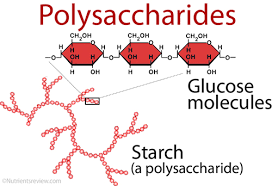
Polysaccharides: Long chains of monosaccharides linked by glycosidic bonds. 3 important polysaccharides are starch, glycogen & cellulose, which are composed of glucose.
Image Source: NutrientsReview
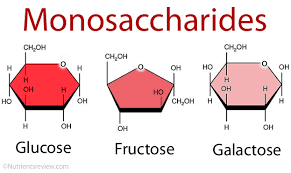
Monosaccharides: Also known as simple sugars. They are the most simplest form of a sugar & they’re the most basic units of carbohydrates. Examples of them include : Fructose, Galactose, Glucose
Image Source: NutrientsReview
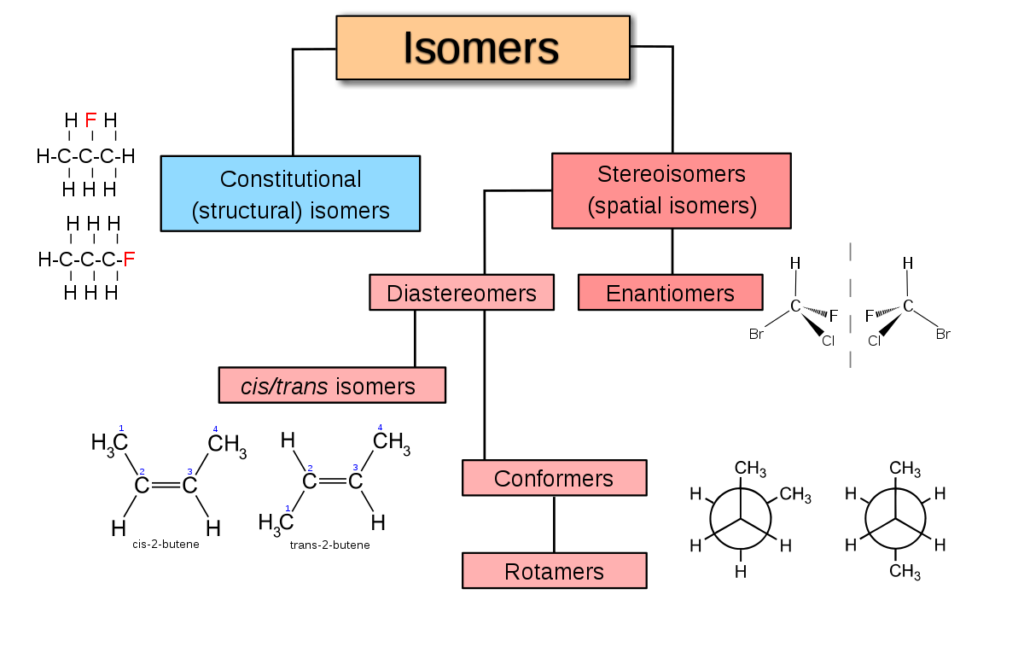
Isomers: They are 2 or more compounds with identical formulas but they have different arrangements of atoms in the molecule which gives different properties.
Image Source: Wikipedia
Where are they found & What do they do?
Biocatalysts can be found in many organisms and living things in/from the environment. These living things include plants, fungi, bacteria & yeasts
Biocatalysts can be found in plants, more specifically in plant cells. Plants contain many different enzymes which can be used in a variety of different processes, however we will only be focusing on the important enzymes. Plants produce important enzymes such as proteases, amylases, lipases & cellulases. Plants produce even more enzymes and some of those enzymes will get mentioned in sections below. These 4 main enzymes are used within the plants for important processes including:
- Proteases – Enzymes which catalyze proteolysis which is the process of breaking down long protein chains into smaller amino acid chains and eventually single amino acids.
- Amylases – Enzymes which catalyze the hydrolysis of starch into sugars. They reduce polysaccharides (such as cellulose, glycogen & sugar) to disaccharides (such as lactose, maltose & sucrose). The sugars are then used by the embryo to induce growth. β-amylase is the amylase enzyme found in plant seeds.
- Lipases – Enzymes which catalyze the hydrolysis of storage triacylglycerols to fatty acids. They break triglycerides into individual fatty acids and glycerol which helps support embryo growth.
- Cellulases – Enzymes which catalyze cellulolysis, which is the break down of cellulose into smaller polysaccharides (cellodextrins) or into glucose units. This is a hydrolysis reaction.
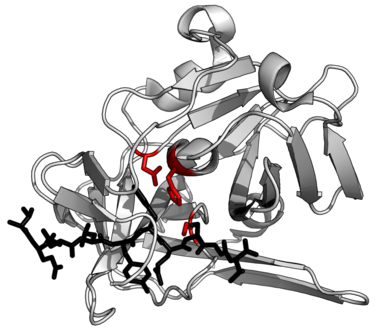
Image Source: Wikipedia
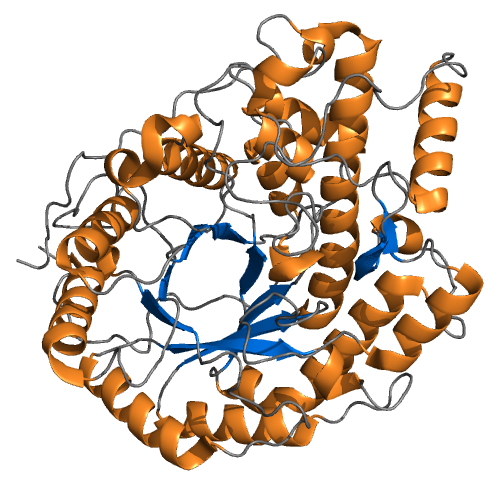
Image Source: Wikipedia
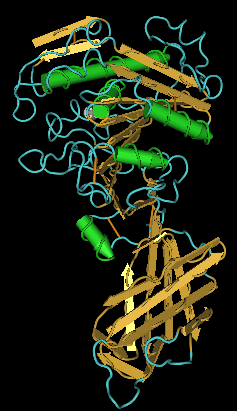
Image Source: Wikipedia
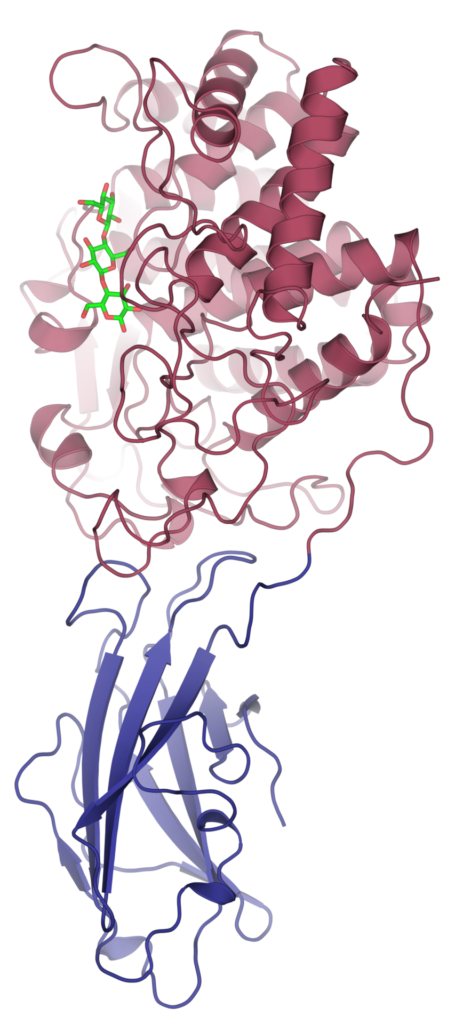
Image Source: Wikipedia
Biocatalysts are also found in fungi. Enzymes found in the cells of fungi include enzymes as mentioned above (with slightly different functions due to the structure of the organism) and they also include other enzymes such as:
- Glucanases – Enzymes which catalyze the hydrolysis of glycosidic bonds in glucan (The main component in cell walls in filamentous fungi and yeast). β-(1,3)-Glucanase is the enzyme involved in this process.
- Pectinases – Enzymes which catalyze the breakdown of pectin (a cell wall component) into simple sugars and galacturonic acid (a sugar acid).
- Phytases – Enzymes which catalyze the hydrolysis of phytic acid producing phosphate.
- Xylanases – Enzymes which catalyze the hydrolysis of xylans (polysaccharide) into xylose (monosaccharide).
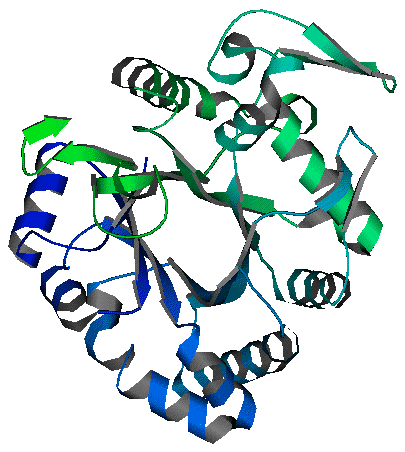
Image Source: mrc-lmb
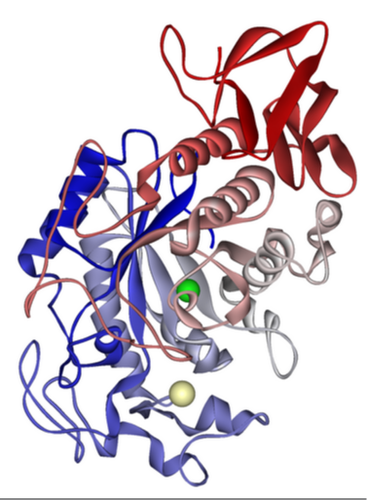
Image Source: IndiaMart
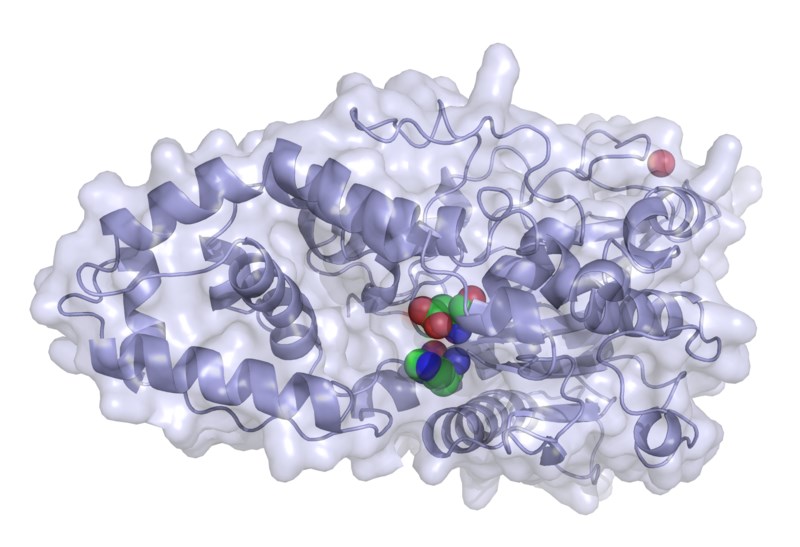
Image Source: Creative Enzymes
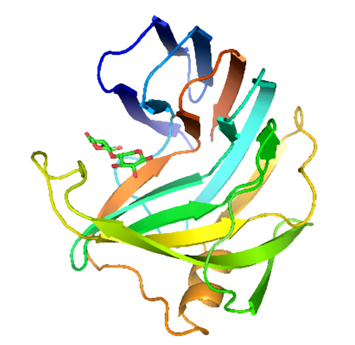
Image Source: Creative Enzymes
As for bacteria, they contain the enzymes that have been mentioned in both plant and fungi sections. They will have slightly different functions because of the structure of the bacteria compared to plants and fungi, but the enzymes are still present in bacteria. These enzymes include: Amylases and Proteases. Bacteria also have:
- Isomerase – Enzymes which catalyze interconversion of isomers. Converts a molecule from one isomer to another.
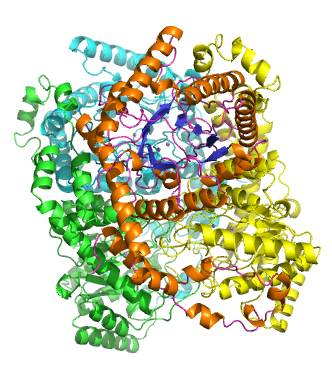
Picture of an Isomerase enzyme
Image Source: Wikipedia
Probably one of the most common examples we see happening in real life is with yeast. Yeast is used in all the dough we make and all the foods we eat that contain dough as an ingredient (e.x. pizza, bread, desserts like cinnamon rolls, etc.). Yeast contains two main enzymes:
- Invertases – Enzymes which catalyze the hydrolysis of sucrose (disaccharide) into fructose and glucose (monosaccharides).
- Maltases – Enzymes which catalyze the hydrolysis of maltose (disaccharide) to glucose (monosaccharide).
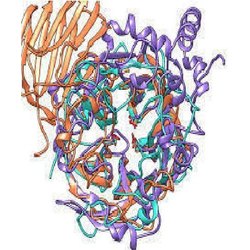
Image Source: Creative Enzymes
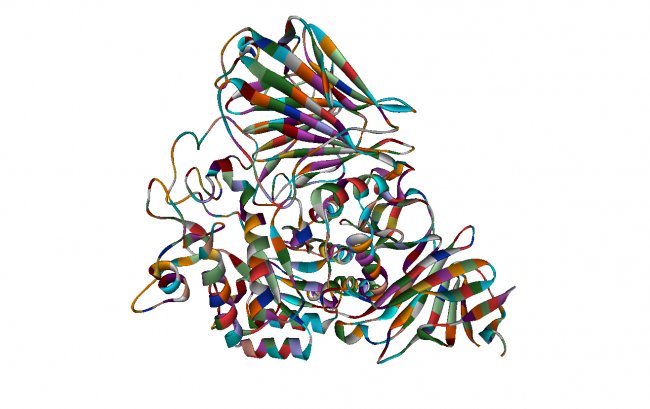
Image Source: ThingLink
Why are they important?
Well, biocatalysts are very important because as previously stated, most of the time, biocatalysts are enzymes. Enzymes as we know are important for most processes in all living organisms, which means they are very significant and important for life. Without biocatalysts many living things and organisms can’t live at all, this includes plants, fungi & bacteria. Animals would also get negatively affected because without enzymes they would also be unable to run the most essential biological processes needed for life. It isn’t just what is around us, humans, that will get negatively affected, but we will get affected as well, we will not be able to live without enzymes because they are necessary for even the most basic biological processes that keep us alive, healthy and well.
So, Basically biocatalysts are NEEDED for life to happen around us and within us. Without them we wouldn’t know what life is and we wouldn’t be alive.
Another very important use of biocatalysts are in the industries. They are used in many different industries including the food, oil chemical, pharmaceutical, industrial detergent, fine chemical industries, etc.
The following sections will dive deeper into the applications of biocatalysts in industries and why they are important.
How are they used in the Industry/Applications in the Industry?
Biocatalysts are used in many different processes ranging in a variety of industries including…
- Food/Beverages
- Oil Chemicals
- Pharmaceutical
- Industrial Detergents
- Fine Chemicals
- Paper/Pulp
- Textiles
- Biodiesel
- Animal Feed
- Waste Management
- Etc.
To use a certain enzyme in the industry, it needs to be at a specific temperature and pH range. When an enzyme gets overheated, it gets destroyed/denatured. When an enzyme doesn’t get enough heat, it works slower. So, heating an enzyme at its optimal, specific temperature will make the enzyme at its best performance. The pH conditions are also important to control. If the pH range is off by a significant amount, the enzyme will start denaturing. If the pH range is off by a small amount, the enzyme will work slower. The pH range needs to be at a specific level according to each enzyme, to get the best performance. Having both of these conditions at the best levels and ranges will result in faster and safer reactions.
Examples of Biocatalysts in Industries
Here in Canada, the paper and pulp industry is fairly important because we export them to other countries which helps Canada generate a higher GDP and income. In the paper/pulp industry, Instead of chlorine, Xylanase is used in the prebleaching of kraft pulp. This reduces or even eliminates the need of chlorine in the process. Reducing or eliminating chlorine is better for the health of humans and other organisms because chlorine produces dioxins which cause cancer.
Pectinase is used in the fruit industry for degradation of plant materials to speed up extraction of juices from fruits. Pectinases are also used for retting, which is the process of engaging the action of micro-organisms and moisture on plants to dissolve or rot away cell tissue and pectin surrounding fibre bundles. This separates the fibre from the stem.
Proteases are commonly used in washing powders/biological detergents (for pre-soaking conditions and direct liquid applications & removing stains from clothes), tannery, food (used in biscuits to lower the protein level in flour), leather processing, brewery & pharmaceuticals.
Amylases are used to produce starches, syrups (such as high fructose corn syrup), clarified fruit juices, pharmaceuticals (digestive aid medicines). They are also used in the brewing industry, textiles industry, paper industry & they are used in the baking industry (breakdown of starch in the flour to sugar).
Cellulases are used in fruit juice processing (to clarify fruit juices), the textile industry, paper industry (degrade starch to lower viscosity, coating paper, etc.) & biofuels industry (cellulose breakdown into sugars that can be fermented).
Xylanses are used in the animal feed industry, paper industry, food processing, biofuels, baking, brewing & textiles industry.
Isomerases are used in the starch industry (in production of high fructose syrups) & sugar production.
Lipases are used in food (implemented during Roquefort cheese production to enhance blue-mold cheese ripening), oil chemicals, fine chemistry, biodiesel, detergents, dairy industry (in oils, fats, butter, cream, etc.), leather processing & waste management
Invertases are used in food processing and syrup production (because of the sweetness of the enzyme).
Phytases are mainly used in the animal feed industry.
Glucanases are mainly used in animal feed & the brewing industry.
Why are they used in the Industry?/ Importance in the Industry
Biocatalysts can help improve/update many processes and aspects within different industries. The following reasons are reasons as to why biocatalysts are used in industries, and why they are so important and significant. I will also add a list of disadvantages, just so we can see both sides of this application and get a bigger picture, instead of limiting our views to one side.
Advantages
- Biocatalysts speed up reactions which makes industrial processes way more effective and you get products/results quicker which helps with production and balance the supply and demand of consumers.
- They are cost-effective and may save money. If reactions are sped up then usually less energy is consumed because the reaction takes less time. Also, less of a certain reactant may be used and that might reduce costs (depending on the reactant, whether it is cheap or expensive, and/or the conditions it works under).
- The biological nature of biocatalysts/enzymes makes them less dangerous/hazardous for our health, as opposed to chemical catalysts.
- The biological nature of biocatalysts also makes them less toxic and harmful to the environment when compared to chemical catalysts. They are more environmentally friendly which is better. This is because with biocatalysts, less energy/water & raw materials are used. In addition to that, less waste is produced.
- Since reactions are sped up, we get more products faster. In addition to supplying products to Canadian consumers, Canada can also export more products globally which results in a higher GDP and more money.
Are There Any Disadvantages?
Yes, there are disadvantages to using biocatalysts in the industry. Those disadvantages include…
- When products are used or consumed, some people might develop allergies to the enzymes used in production.
- Enzymes are hard to work with and keep in control because even a slight temperature change can cause the denaturation of an enzyme. If the enzyme gets contaminated with other substances, the reaction will also get affected.
- The cost of enzyme production is expensive. According to biotechnologyforbiofuels.biomedcentral.com, the cost (in USD) per kilogram of enzyme is 316 US$/kg.
Bibliography
All Citations are in APA format
Giuseppe, M. D., & Sanader, M. (2012). Nelson chemistry 12: University preparation. Toronto, Ontario: Nelson Education.
What Do Plant Enzymes Do? (n.d.). Retrieved November 13, 2020, from https://www.foodenzymeinstitute.com/content/What-do-Plant-Enzymes-do.aspx
Biological Catalysts. (n.d.). Retrieved November 12, 2020, from https://encyclopedia2.thefreedictionary.com/Biological+Catalysts
Nobel Prizes 2020. (n.d.). Retrieved November 12, 2020, from https://www.nobelprize.org/prizes/chemistry/1989/8989-enzymes-biological-catalysts/
NCBI Bookshelf. (n.d.). Retrieved November 12, 2020, from https://www.ncbi.nlm.nih.gov/books/NBK9921/
Plant-Derived Enzymes: A Treasure for Food Biotechnology. (2019, January 1). Retrieved November 12, 2020, from https://www.sciencedirect.com/science/article/pii/B9780128132807000281
Animal Nutrition Document. (n.d.). Retrieved November 12, 2020, from http://animalnutrition.dupont.com/fileadmin/user_upload/live/animal_nutrition/documents/open/974_micro01.pdf
Britannica School. (n.d.). Retrieved November 12, 2020, from https://school.eb.com/?target=%2Flevels%2Fhigh%2Farticle%2Fcatalyst%2F20761
Gould, S. E., & Gould, S. E. (2014, January 12). Speeding up reactions: biological vs. chemical catalysts. Retrieved November 12, 2020, from https://blogs.scientificamerican.com/lab-rat/speeding-up-reactions-biological-vs-chemical-catalysts/
What Are Enzymes And What Do They Do? (2020, October 7). Retrieved November 12, 2020, from https://mammothmicrobes.com/portfolio/what-are-enzymes-and-what-do-they-do/
Wikipedia contributors. (2020e, October 20). Protease. Retrieved November 12, 2020, from https://en.wikipedia.org/wiki/Protease#:%7E:text=A%20protease%20(also%20called%20a,reaction%20where%20water%20breaks%20bonds.
Lin, Y. Y. (1987). Substrate Specificity of Plant Lipases. Retrieved November 12, 2020, from https://link.springer.com/chapter/10.1007/978-1-4684-5263-1_61#:%7E:text=In%20plants%2C%20lipases%20(EC%203.1,the%20growth%20of%20the%20embryo.
Biologydictionary.net Editors. (2017, January 10). Disaccharide. Retrieved from https://biologydictionary.net/disaccharide/
Amylase – an overview | ScienceDirect Topics. (n.d.). Retrieved November 12, 2020, from https://www.sciencedirect.com/topics/agricultural-and-biological-sciences/amylase#:%7E:text=Amylases%20are%20a%20class%20of,Sundarram%20and%20Murthy%2C%202014).
Biology Online. (2020, January 29). Amylase Definition and Examples – Biology Online Dictionary. Retrieved November 12, 2020, from https://www.biologyonline.com/dictionary/amylase
Wikipedia contributors. (2020c, May 20). Beta-amylase. Retrieved November 12, 2020, from https://en.wikipedia.org/wiki/Beta-amylase
Barros, M. (n.d.). Seed lipases: sources, applications and properties – a review. Retrieved November 12, 2020, from https://www.scielo.br/scielo.php?script=sci_arttext&pid=S0104-66322010000100002&lng=pt&nrm=iso
Wikipedia contributors. (2020f, September 6). Lipase. Retrieved November 12, 2020, from https://en.wikipedia.org/wiki/Lipase
Wikipedia contributors. (2020h, October 28). Cellulase. Retrieved November 12, 2020, from https://en.wikipedia.org/wiki/Cellulase
Enzymes: An Explanation – Biocatalysts Ltd. (n.d.). Retrieved November 12, 2020, from https://www.biocatalysts.com/products-an-explanation/
Zhou, J. (2017, August 15). Functional Analysis of a Novel β-(1,3)-Glucanase from Corallococcus sp. Strain EGB Containing a Fascin-Like Module. Retrieved November 12, 2020, from https://aem.asm.org/content/83/16/e01016-17#:%7E:text=%CE%B2%2D(1%2C3)%2DGlucanases%20catalyze%20the%20hydrolysis%20of,by%20some%20bacteria%20(1).
Singh, B. (n.d.). Fungal phytases: characteristics and amelioration of nutritional quality and growth of non-ruminants. Retrieved November 12, 2020, from https://pubmed.ncbi.nlm.nih.gov/25132310/#:%7E:text=Fungal%20phytases%20are%20histidine%20acid,thus%20mitigate%20its%20antinutritional%20properties.&text=The%20fungal%20phytases%20are%20high,from%2035%20to%20500%20kDa.
Biology Online. (2019, October 7). Pectinase Definition and Examples – Biology Online Dictionary. Retrieved November 12, 2020, from https://www.biologyonline.com/dictionary/pectinase#:%7E:text=noun%2C%20plural%3A%20pectinases,of%20juices%20from%20fruits.
Ferreira, R. D. G., Azzoni, A. R., & Freitas, S. (2018, March 29). Techno-economic analysis of the industrial production of a low-cost enzyme using E. coli: the case of recombinant β-glucosidase. Retrieved November 12, 2020, from https://biotechnologyforbiofuels.biomedcentral.com/articles/10.1186/s13068-018-1077-0#:%7E:text=performed%20per%20year.-,Economic%20assessment,by%20Klein%2DMarcuschamer%20et%20al.
Using enzymes in the industry. (n.d.). Retrieved November 12, 2020, from https://getrevising.co.uk/grids/using-enzymes-in-the-industry
Benefits (About enzymes) – AMFEP. (n.d.). Retrieved November 12, 2020, from https://amfep.org/about-enzymes/benefits/
Exploring the chemistry and evolution of the isomerases. (n.d.). Retrieved November 12, 2020, from https://www.ncbi.nlm.nih.gov/pmc/articles/PMC4763729/
Wikipedia contributors. (2020i, November 12). Invertase. Retrieved November 12, 2020, from https://en.wikipedia.org/wiki/Invertase
The Editors of Encyclopaedia Britannica. (n.d.). Maltase | enzyme. Retrieved November 12, 2020, from https://www.britannica.com/science/maltase#:%7E:text=Maltase%2C%20enzyme%20that%20catalyzes%20the,membrane%20lining%20the%20intestinal%20wall.
Committee, A. C. T. B. C. (n.d.). Enzymes – Understanding Ingredients for the Canadian Baker. Retrieved November 12, 2020, from https://ecampusontario.pressbooks.pub/ingredients/chapter/enzymes/#:%7E:text=The%20two%20principal%20enzymes%20present,yeast%20activity%20in%20the%20dough.
Table 1 | Industrial Fungal Enzymes: An Occupational Allergen Perspective. (n.d.). Retrieved November 12, 2020, from https://www.hindawi.com/journals/ja/2011/682574/tab1/
Science Buddies. (2020, January 12). A Juicy Project: Extracting Apple Juice with Pectinase | Science Project. Retrieved November 12, 2020, from https://www.sciencebuddies.org/science-fair-projects/project-ideas/BioChem_p010/biotechnology-techniques/extracting-apple-juice-with-pectinase#:%7E:text=Pectinase%20is%20an%20enzyme%20that,juice%20from%20within%20the%20cells.